Cyclic Adsorption: Principles, Mechanisms, and Industrial Applications

Cyclic adsorption is a dynamic separation and purification technology that leverages the reversible adsorption-desorption behavior of materials to achieve continuous operation. By alternating between adsorption and regeneration phases in a controlled cycle, it enables efficient utilization of adsorbent capacity, energy savings, and high-purity product recovery. This article systematically introduces the fundamental principles, key mechanisms, and diverse industrial applications of cyclic adsorption, highlighting its critical role in modern chemical engineering and environmental management.

1. Introduction

Adsorption—a surface phenomenon where molecules (adsorbates) adhere to solid materials (adsorbents) due to van der Waals forces, electrostatic interactions, or chemical bonding—has long been utilized for separation and purification. Traditional fixed-bed adsorption systems, however, operate in batch mode, requiring frequent shutdowns for adsorbent regeneration and limiting productivity. Cyclic adsorptionaddresses this limitation by integrating sequential adsorption, desorption, and equilibration steps into a continuous loop, ensuring uninterrupted operation while maximizing adsorbent efficiency.
This technology is the cornerstone of advanced separation processes such as pressure swing adsorption (PSA), temperature swing adsorption (TSA), vacuum swing adsorption (VSA), and electric swing adsorption (ESA). It finds widespread application in gas purification (e.g., oxygen/nitrogen production, CO₂ capture), liquid-phase separations (e.g., water treatment, solvent recovery), and energy storage (e.g., hydrogen purification).

2. Fundamental Principles of Cyclic Adsorption

2.1 Core Concept

The essence of cyclic adsorption lies in the reversibilityof the adsorption process. Adsorbents selectively capture target components from a fluid mixture (gas or liquid) under specific conditions (e.g., high pressure, low temperature), followed by their release (desorption) when conditions are altered (e.g., reduced pressure, elevated temperature). By repeating this cycle, the adsorbent maintains a stable working capacity, enabling continuous separation.

2.2 Key Cycle Steps

A typical cyclic adsorption process consists of four stages (illustrated in Figure 1):
  1. ​Adsorption Phase​​: The feed stream (containing the target component) flows through the adsorbent bed. The adsorbent selectively captures the target molecules until it reaches saturation or breakthrough (when the effluent concentration exceeds a threshold).
  2. ​Equilibration/Blowdown Phase​​ (optional): For pressure-driven cycles (e.g., PSA), residual gas in the bed is partially vented to reduce pressure before regeneration, improving energy efficiency.
  3. ​Desorption/Regeneration Phase​​: Conditions are modified (e.g., pressure lowered, temperature raised, or vacuum applied) to weaken adsorbate-adsorbent interactions, releasing the trapped molecules. A purge gas (e.g., inert or recycled stream) may be used to carry away desorbed species.
  4. ​Repressurization Phase​​ (for PSA/VSA): The bed is restored to operating pressure using a portion of the purified product or fresh feed, preparing it for the next adsorption cycle.
The duration and sequence of these steps are optimized based on adsorbent properties, feed composition, and desired product purity.

3. Mechanisms Governing Cyclic Adsorption

3.1 Adsorption Equilibrium and Kinetics

The efficiency of cyclic adsorption depends on two core factors:
  • ​Equilibrium Capacity​​: The maximum amount of adsorbate a material can hold under given conditions, described by isotherms (e.g., Langmuir, Freundlich, or Toth models). Selective adsorbents (e.g., zeolites for O₂/N₂ separation, activated carbon for VOCs) are chosen based on their preferential affinity for target components.
  • ​Kinetic Rate​​: The speed at which adsorbate molecules diffuse to and bind on the adsorbent surface. Microporous materials (e.g., zeolites) may exhibit slow diffusion, necessitating shorter adsorption cycles to avoid mass transfer limitations.

3.2 Regeneration Mechanisms

Desorption is driven by disrupting the adsorbate-adsorbent interaction energy. Common regeneration strategies include:
  • ​Pressure Swing (PSA/VSA)​​: Lowering system pressure reduces the partial pressure of adsorbed species, shifting equilibrium toward desorption. VSA further enhances this by applying vacuum.
  • ​Temperature Swing (TSA)​​: Heating the bed increases the thermal energy of adsorbate molecules, overcoming adsorption forces. TSA is ideal for strong adsorption (e.g., CO₂ on solid amine sorbents) but requires significant energy input.
  • ​Electric Swing (ESA)​​: Applying an electric field (e.g., to polarizable adsorbents like activated carbon) induces dipole alignment changes, weakening adsorption. ESA is emerging for high-efficiency CO₂ capture.
  • ​Purge Gas Assisted​​: A small flow of inert or reactive gas (e.g., N₂, steam) carries away desorbed molecules, accelerating regeneration.

3.3 Cycle Design Considerations

Optimal cyclic performance requires balancing:
  • ​Working Capacity​​: The difference between adsorption and desorption loadings, directly impacting yield.
  • ​Breakthrough Time​​: The duration before the adsorbent saturates, determining cycle length.
  • ​Energy Consumption​​: Regeneration steps (e.g., heating, pressurization) should minimize operational costs.
  • ​Adsorbent Longevity​​: Repeated cycling may cause attrition (particle breakdown) or fouling, necessitating robust material selection.

4. Industrial Applications of Cyclic Adsorption

4.1 Gas Separation and Purification

  • ​Oxygen/Nitrogen Production (PSA)​​: Zeolite molecular sieves selectively adsorb N₂ (under high pressure) from air, yielding >90% O₂ in the effluent. Cyclic PSA units are compact, energy-efficient alternatives to cryogenic distillation for medical and industrial O₂ supply.
  • ​Hydrogen Purification (PSA/VSA)​​: PSA systems remove CO, CO₂, and CH₄ from reformer gas streams using activated carbon or zeolites, producing high-purity H₂ (>99.9%) for fuel cells or ammonia synthesis.
  • ​Volatile Organic Compounds (VOCs) Removal (TSA/PSA)​​: Activated carbon or polymer-based adsorbents capture VOCs (e.g., benzene, toluene) from industrial exhaust, with desorption via steam or hot N₂ for solvent recovery.

4.2 Air Pollution Control

  • ​CO₂ Capture (TSA/ESA)​​: Solid sorbents (e.g., metal-organic frameworks, MOFs) or amine-functionalized materials adsorb CO₂ from flue gas during cyclic TSA or ESA processes, offering a low-energy alternative to amine scrubbing for carbon capture and storage (CCS).
  • ​Mercury and Toxic Gas Removal​​: Silver-impregnated zeolites or activated carbon cyclically adsorb Hg⁰ or H₂S from coal-fired power plant emissions, protecting public health and ecosystems.

4.3 Liquid-Phase Separations

  • ​Water Treatment (TSA/PSA)​​: Ion-exchange resins or activated carbon cyclically remove heavy metals (e.g., Pb²⁺, Cd²⁺) or organic pollutants (e.g., pesticides) from wastewater, with regeneration via acid/base washes or solvent elution.
  • ​Pharmaceutical and Food Industry​​: Cyclic adsorption purifies solvents (e.g., ethanol dehydration using molecular sieves) or isolates active ingredients (e.g., separation of chiral compounds).

4.4 Energy Applications

  • ​Natural Gas Sweetening (PSA)​​: Acid gases (H₂S, CO₂) are removed from methane-rich streams using PSA systems, ensuring pipeline-quality gas.
  • ​Fuel Cell Feed Preparation (PSA)​​: Cyclic adsorption upgrades biogas or digester gas by removing CO₂ and H₂S, producing clean CH₄ for fuel cells.

5. Challenges and Future Directions

Despite its advantages, cyclic adsorption faces challenges:
  • ​Material Limitations​​: Adsorbents with higher selectivity, faster kinetics, and greater stability under harsh conditions (e.g., high temperature/pressure) are needed.
  • ​Process Intensification​​: Miniaturization and integration with renewable energy sources (e.g., solar-heated TSA) could enhance efficiency and sustainability.
  • ​Digital Optimization​​: Advanced modeling (e.g., machine learning for cycle parameter prediction) and real-time monitoring (e.g., sensors for bed saturation) can improve control and reduce energy waste.
Future research focuses on developing novel adsorbents (e.g., MOFs, covalent organic frameworks), hybrid cycles (combining PSA with membrane separation), and applications in emerging fields (e.g., hydrogen energy, circular economy).

6. Conclusion

Cyclic adsorption is a versatile and efficient technology that transforms static adsorption into a dynamic, continuous process. By leveraging reversible adsorption-desorption mechanisms and optimized cycle designs, it enables precise separation, energy savings, and scalable industrial deployment. As material science and process engineering advance, cyclic adsorption will play an increasingly pivotal role in addressing global challenges in clean energy, environmental protection, and resource recovery.

The Predictive Role of Skeletal Density and Porosity in Fracture Risk​

​​​Introduction​

Fractures, particularly osteoporotic fractures, represent a major global health concern due to their association with morbidity, mortality, and healthcare costs. Accurate prediction of fracture risk is essential for early intervention and prevention. While ​​bone mineral density (BMD)​​ has long been the gold standard for assessing fracture risk, emerging evidence highlights the importance of ​​bone microarchitecture​​, particularly ​​skeletal porosity​​, as an additional—and sometimes more sensitive—predictor. This article explores how ​skeletal density and porosity​ contribute to fracture risk prediction.

​Background: Bone Density and Porosity​

  • ​Bone Mineral Density (BMD):​​ Measured primarily via ​​Dual-energy X-ray Absorptiometry (DXA)​​, BMD reflects the amount of mineral content per unit volume of bone. Low BMD is strongly associated with increased fracture risk, as seen in osteoporosis.
  • ​Skeletal Porosity:​​ Refers to the presence of ​​microscopic pores or voids within trabecular and cortical bone​​. Increased porosity weakens bone structure, reducing its load-bearing capacity even when BMD appears normal.
While BMD provides a ​​macroscopic measure​​ of bone strength, porosity offers insights into ​​microstructural integrity​​, making it a complementary predictor.

​Mechanisms Linking Density and Porosity to Fracture Risk​

  1. ​Bone Strength Depends on Both Density and Structure​
    • ​BMD​​ contributes to bone’s resistance to compression but does not account for ​​trabecular connectivity or cortical thickness​​.
    • ​Porosity​​ (especially in cortical bone) reduces bone stiffness and increases susceptibility to microcracks, leading to fractures under lower stress.
  2. ​Cortical Porosity and Age-Related Bone Loss​
    • With aging, ​​cortical bone​​ (the dense outer shell) undergoes ​​endosteal resorption​​, increasing porosity.
    • Even in individuals with ​​normal BMD​​, high cortical porosity can lead to ​​fragility fractures​​ (e.g., hip, wrist).
  3. ​Trabecular Bone Microarchitecture​
    • Trabecular bone (found in vertebrae and ends of long bones) relies on ​​trabecular thickness and connectivity​​.
    • Increased ​​trabecular spacing (a form of porosity)​​ reduces structural support, raising vertebral fracture risk.

​Clinical Relevance: Beyond DXA​

  • ​DXA Limitations:​​ While DXA-based BMD predicts fractures, it misses ​​microarchitectural deterioration​​.
  • ​Advanced Imaging Techniques:​
    • ​High-resolution peripheral quantitative computed tomography (HR-pQCT)​​ and ​​micro-CT​​ assess ​​porosity and trabecular structure​​.
    • ​Trabecular Bone Score (TBS)​​ evaluates bone texture from DXA images, indirectly reflecting microarchitecture.
  • ​Predictive Power:​​ Studies show that ​​high cortical porosity​​ is an independent risk factor for fractures, even in patients with ​​normal or osteopenic BMD​​.

​Conclusion​

While ​​skeletal density (BMD)​​ remains a cornerstone in fracture risk assessment, ​​skeletal porosity​​—particularly in cortical and trabecular bone—provides critical additional information. Advanced imaging techniques that evaluate ​​microarchitecture and porosity​​ can improve fracture prediction, especially in individuals with ​​normal BMD but high fracture risk​​. Future clinical guidelines may incorporate ​​porosity metrics​​ alongside BMD for more precise risk stratification.

​Key Takeaways:​

✅ ​​BMD alone is insufficient​​—porosity affects bone strength independently.
✅ ​​Cortical porosity increases fracture risk​​, even with normal BMD.
✅ ​​Advanced imaging (HR-pQCT, TBS)​​ helps assess porosity for better fracture prediction.

Temperature Programmed Reaction: Principles and Characteristics​

1. Introduction​

​​Temperature Programmed Reaction (TPR)​​ is a dynamic analytical technique used to study the reactivity of materials, particularly catalysts, by monitoring chemical reactions as a function of increasing temperature. A well-known example is ​​Temperature-Programmed Reduction (TPR)​​, where a reducible material (e.g., a metal oxide catalyst) is exposed to a reducing gas (e.g., H₂) while the temperature is ramped linearly. Other variants include ​​Temperature-Programmed Oxidation (TPO)​​ and ​​Temperature-Programmed Desorption (TPD)​​.
This technique provides valuable insights into reaction kinetics, active sites, and mechanistic pathways under controlled thermal conditions.

​2. Principle of TPR​

The fundamental principle of TPR involves ​​heating a sample at a controlled rate (typically 1–10 °C/min) while exposing it to a reactive gas (e.g., H₂, O₂, or CO)​​. The reaction between the sample and the gas is monitored in real-time using a detector (e.g., mass spectrometer, thermal conductivity detector (TCD), or gas chromatography).

​Key Steps in TPR:​

  1. ​Sample Preparation:​​ The material (e.g., a catalyst or metal oxide) is placed in a reaction chamber.
  2. ​Gas Flow:​​ A reactive gas (e.g., H₂ for reduction) is introduced along with an inert carrier gas (e.g., Ar or N₂).
  3. ​Temperature Ramp:​​ The sample is heated linearly over time (e.g., 1–20 °C/min).
  4. ​Reaction Monitoring:​​ As the temperature increases, the sample undergoes chemical reactions (e.g., reduction, oxidation, or desorption), releasing or consuming gases.
  5. ​Signal Detection:​​ The consumption (or evolution) of reactive species (e.g., H₂ uptake in TPR) is measured, producing a ​​TPR profile (temperature vs. signal intensity)​​.

​Example: TPR for Metal Oxides​

  • When a metal oxide (e.g., CuO or NiO) is reduced by H₂, the reaction occurs at specific temperatures, producing H₂O.
  • The ​​peak positions in the TPR curve​​ indicate the ​​reduction temperatures​​ of different metal species.
  • The ​​peak areas​​ correlate with the ​​amount of reducible species​​.

​3. Characteristics of TPR​

​(a) Dynamic and Continuous Process​

  • Unlike isothermal methods (constant temperature), TPR is a ​​continuous, temperature-dependent​​ technique, allowing the study of reactions over a wide thermal range.

​(b) High Sensitivity to Surface Reactions​

  • TPR is particularly useful for studying ​​surface-active sites​​ (e.g., catalytic metals, oxides, and supports).
  • It can distinguish between ​​different types of active sites​​ based on their reduction/oxidation temperatures.

​(c) Quantitative and Qualitative Insights​

  • ​Qualitative:​​ Identifies reaction phases and transition temperatures.
  • ​Quantitative:​​ Measures the ​​amount of reactive species​​ (e.g., H₂ consumption in TPR) and ​​active site density​​.

​(d) Non-Destructive (in most cases)​

  • The sample remains largely intact after TPR, allowing further characterization (e.g., XRD, BET, or SEM).

​4. Applications of TPR​

  • ​Catalysis:​​ Studying the reducibility of metal oxides (e.g., Pt, Ni, Fe-based catalysts).
  • ​Surface Science:​​ Investigating adsorption-desorption phenomena (TPD).
  • ​Material Characterization:​​ Determining oxidation states and active sites.
  • ​Environmental Science:​​ Analyzing soot oxidation (TPO) or pollutant decomposition.

​5. Advantages and Limitations​

​Advantages:​

✔ Real-time reaction monitoring
✔ High sensitivity to temperature-dependent processes
✔ Useful for both qualitative and quantitative analysis

​Limitations:​

✖ Requires careful calibration (gas flow, detector sensitivity)
✖ Overlapping peaks may complicate interpretation
✖ Not suitable for very fast or extremely slow reactions

​6. Conclusion​

Temperature Programmed Reaction (TPR) is a powerful technique for understanding ​​thermal reactivity, catalytic mechanisms, and surface chemistry​​. By systematically varying temperature and monitoring gas interactions, researchers can gain insights into ​​reaction kinetics, active sites, and material properties​​. Variants like TPR, TPO, and TPD make this method versatile for applications in ​​catalysis, materials science, and environmental studies​​.

China BET Adsorption Analyzer Factory Recommendation: BSD Instrument

When it comes to high-quality BET adsorption analyzer in China, BSD Instrument Co., Ltd stands out as an industry leader with 18 years of specialized experience in designing and manufacturing sorption analyzers. This article highlights why BSD Instrument is your ideal partner for surface area and porosity analysis solutions.

Company Overview

BSD Instrument Co., Ltd, located in Beijing, China, has dedicated itself to the scientific community for nearly two decades. Their mission is clear: “Driving scientific and industrial advancements with precise material analysis tools.” The company focuses on providing world-class sorption and surface characterization solutions that enable breakthroughs in material science and industrial applications.

Core Expertise and Product Range

BSD Instrument specializes in advanced instruments for surface area, gas sorption, and adsorption studies. Their flagship product line, BSD-SORB, offers a comprehensive range of high-tech instruments designed for various adsorption and surface analysis needs:
  • ​Gravimetric Sorption​​ for precise vapor and gas adsorption measurements
  • ​Surface Area & Porosity Analysis​​ for accurate characterization of material properties
  • ​High-Pressure Gas Sorption​​ ideal for measuring gas uptake under extreme conditions
  • ​Corrosive Gas Adsorption​​ solutions for studying materials in the presence of reactive gases
  • ​Chemisorption & Breakthrough Curve Analysis​​ for evaluating catalytic properties

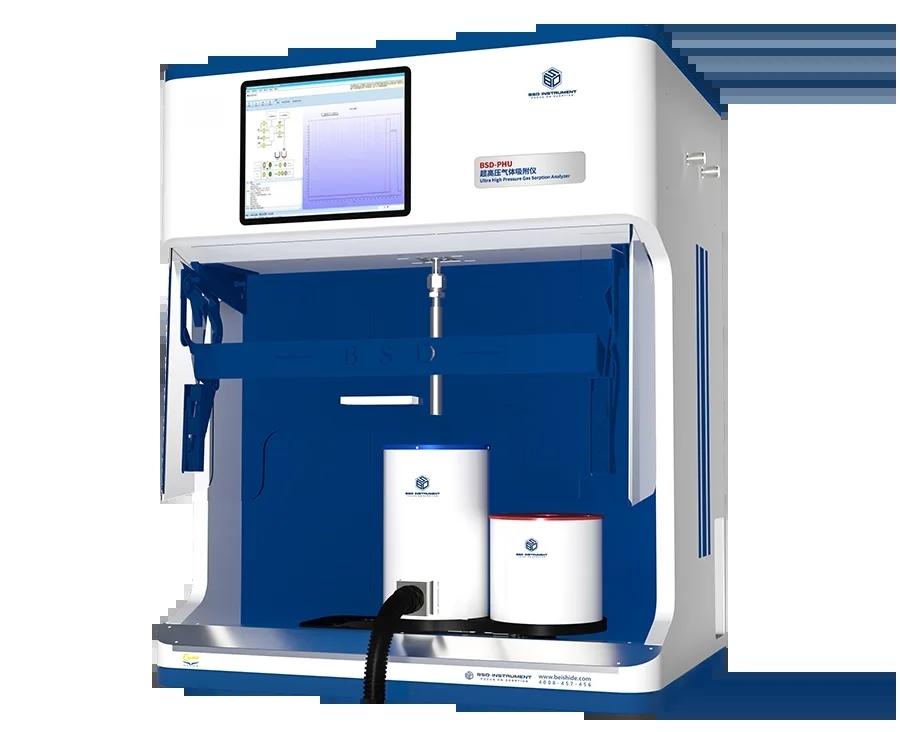
Featured Product: BSD-660 Series Automatic Specific Surface Area and Micropore Analyzer

One of their most impressive offerings is the BSD-660 series, a cutting-edge, fully automated physisorption analyzer that represents the pinnacle of Chinese-manufactured BET analyzers:

Key Features:

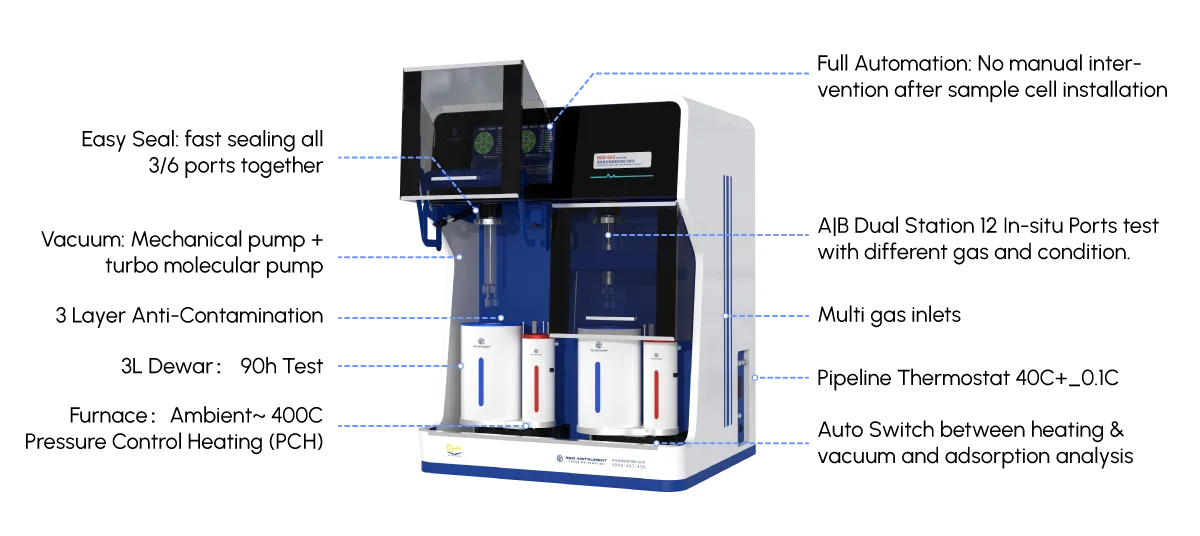
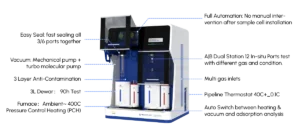
  • ​Full Automation​​: Complete automation across every phase of testing, including self-checks, free zone measurements, material activation, and in situ adsorption testing
  • ​High Throughput​​: Up to 12 samples analyzed simultaneously with 3/6/9/12 analysis ports
  • ​Wide Analysis Range​​: Capable of analyzing microporous (0.35nm-2nm) and mesoporous (2nm-500nm) materials
  • ​Precision Engineering​​: Achieves RSD< 0.5% (Reference materials) with vacuum system capabilities down to 10^-8 Pa
  • ​Versatile Gas Compatibility​​: Supports N2/Ar/Kr adsorption analysis, combustible gases (H₂, CH₄, C2H6), corrosive gases (SO2, NH4), and vapor adsorption (water)

Advanced Technology:

  • ​Innovative A/B Station Design​​: Allows independent operation with two gases and different test settings
  • ​Pressure Control Heating (PCH)​​: Protects pore structure and prevents material degradation
  • ​Zero Helium Contamination​​: No need for sample cell removal during degassing
  • ​Multiple Gas Inlets​​: Accommodates various gases for versatile testing scenarios
  • ​Self-Diagnosis System​​: Conducts comprehensive self-checks on key parameters

Industry Applications

BSD Instrument’s analyzers serve diverse industries:
  • ​Pharmaceuticals​​: Material characterization according to pharmacopoeia recommendations
  • ​Energy​​: Battery materials research including lithium-ion battery components
  • ​Environmental Science​​: Gas separation membrane characterization
  • ​Catalysis Research​​: Chemisorption and breakthrough curve analysis for catalyst evaluation
  • ​Material Science​​: Comprehensive surface and porosity analysis

Quality Assurance

BSD Instrument maintains unwavering commitment to quality:
  • ​ISO-Certified​​ manufacturing processes
  • ​International Standards Compliance​​ ensuring global reliability
  • ​Rigorous Testing​​ of all instruments before delivery
  • ​Continuous R&D Investment​​ to stay at the forefront of sorption and surface analysis technology

Global Reach with Local Expertise

While serving customers worldwide, BSD Instrument maintains deep expertise in addressing the specific needs of the Chinese market and international clients alike. Their instruments have been referenced in numerous academic papers, demonstrating their value in cutting-edge research.

Why Choose BSD Instrument?

  1. ​18 Years of Specialized Experience​​ in sorption analysis
  2. ​Comprehensive Product Line​​ covering all major surface analysis techniques
  3. ​Advanced Automation​​ that reduces manual handling and human error
  4. ​High Precision Measurements​​ with industry-leading accuracy
  5. ​Technical Support​​ from experts who understand your application needs
  6. ​Global Service Network​​ with support reaching researchers worldwide
For researchers and industries requiring reliable, high-precision BET adsorption analysis, BSD Instrument Co., Ltd represents the pinnacle of Chinese manufacturer expertise. Their commitment to innovation, quality, and customer service makes them the recommended choice for surface area and porosity analysis solutions.
​Contact Information:​
BSD Instrument Co., Ltd
No 6 Xinlitun North Road, Shahe Town, Changping District, Beijing, 102206, China
Phone: +65 84967547
Email: info@bsdsorption.com
WhatsApp: +65 84967547
Experience the difference that 18 years of specialization and innovation can make in your surface analysis capabilities.

​​China Gravimetric Gas Sorption Analyzer Brands: Leading Innovation and Precision with BSD Instrument​

​China Gravimetric Gas Sorption Analyzer Brands: Leading Innovation and Precision with BSD Instrument​
In the field of material science and industrial research, precise characterization of gas and vapor adsorption behaviors is critical for developing advanced materials, optimizing industrial processes, and driving scientific discovery. Among the leading brands offering high-quality gravimetric gas sorption analyzers in China, ​​BSD Instrument Co., Ltd.​​ stands out as a trusted name with over ​​18 years of expertise​​ in designing and manufacturing advanced sorption analysis instruments.

What is a Gravimetric Gas Sorption Analyzer?

A ​gravimetric gas sorption analyzer​​ is a highly sensitive analytical instrument that measures the adsorption and desorption of gases or vapors onto solid materials by detecting real-time mass changes. Unlike traditional volumetric methods, gravimetric techniques utilize a high-precision microbalance to directly measure mass variations, offering superior accuracy and eliminating common errors such as temperature gradients and non-ideal gas behavior. These instruments are widely used in applications including ​​surface area analysis, porosity characterization, gas storage studies, catalyst evaluation, and moisture/vapor interaction assessments​​.

Why Choose BSD Gravimetric Gas Sorption Analyzers?

​BSD Instrument​​ has earned a strong reputation globally for its commitment to ​​innovation, precision, and reliability​​. The company specializes in a full range of sorption and surface analysis solutions, with the ​​gravimetric sorption analyzer​​ being one of its flagship products. Here’s what makes BSD a preferred brand for researchers and industries worldwide:

🔬 Key Features of BSD Gravimetric Gas Sorption Analyzers

1. ​​High Precision & Accuracy​

Equipped with an ​​industrial-grade microbalance​​, BSD analyzers deliver measurement resolution as fine as ​​1 microgram (1µg)​​ over a wide range (up to 5000mg), with even higher sensitivity options available (0.1µg/500mg). This ensures extremely accurate detection of minute mass changes during adsorption and desorption processes.

2. ​​Real-Time Dynamic & Static Measurements​

BSD offers both ​​Dynamic Vapor Sorption (DVS)​​ and ​​Vacuum Static Vapor Sorption (VVS)​​ methodologies. The ​​BSD-VVS&DVS full-function version​​ combines both techniques, enabling comprehensive analysis of ​​adsorption-desorption isotherms​​ and ​​isobaric adsorption kinetics​​ — crucial for understanding material behavior under varying environmental conditions.

3. ​​High Throughput & Efficiency​

With the ability to analyze ​​4 or 8 samples simultaneously​​ under identical conditions, BSD analyzers significantly improve lab productivity. The ​​fully automated cyclic testing​​ function allows repeated adsorption-desorption cycles to evaluate material durability and predict service life — all without manual intervention.

4. ​​Advanced Automation & User-Friendly Design​

  • ​Auto-switching between activation and testing phases​
  • ​Automatic calibration before each test​
  • ​Visual real-time monitoring​​ of sample weight and degassing status
  • ​Multi-mode buoyancy correction​​ for enhanced measurement accuracy

5. ​​Broad Compatibility & Customization​

These analyzers support a wide range of gases including ​​organic vapors, non-corrosive, and corrosive gases​​ (with optional configurations). They also offer:
  • Flexible ​​activation methods​​ (vacuum or gas purging)
  • ​Programmable 32-stage heating​​ for safe and controlled sample preparation
  • ​Precision temperature control​​ from ​​-5°C to 150°C​​ (with optional higher ranges)
  • ​Humidity control​​ from ​​0.1% to 98% P/P0​​, ensuring accurate simulation of real-world conditions

6. ​​Enhanced Reliability & Quality Assurance​

  • ​ISO-certified manufacturing​​ processes
  • ​Rigorous quality control​​ to meet international standards
  • ​Stable thermostatic pipeline​​ and ​​vapor generation systems​​ to prevent contamination and ensure consistency

🏭 About BSD Instrument Co., Ltd.

Founded with a mission to advance scientific and industrial progress through precision analytical tools, ​​BSD Instrument Co., Ltd.​​ is a China-based company specializing in the ​​design and production of sorption analyzers for over 18 years​​. Their product portfolio includes:
  • ​Gravimetric Sorption Analyzers​
  • ​Surface Area & Porosity Analyzers​
  • ​High-Pressure Gas Sorption Systems​
  • ​Corrosive Gas Adsorption Solutions​
  • ​Chemisorption & Breakthrough Curve Analyzers​
BSD’s instruments are widely applied in industries such as ​​pharmaceuticals, energy, environmental science, catalyst development, and advanced materials​​. The company serves a global clientele, bringing ​​automation, efficiency, and accuracy​​ to laboratories around the world.

🌍 Global Reach & Customer Support

BSD Instrument is dedicated to supporting its international customers with:
  • Comprehensive technical support
  • Customized solutions for specific research needs
  • Reliable after-sales service
  • Offices and operations based in ​​Beijing, China​​, with global shipping and communication channels (Phone: +65 84967547, Email: info@bsdsorption.com, WhatsApp: +65 84967547)

✅ Conclusion: Why BSD is a Top Brand for Gravimetric Gas Sorption Analyzers in China

When it comes to selecting a ​​trusted, high-performance gravimetric gas sorption analyzer brand in China​​, ​​BSD Instrument​​ leads the way with its ​​technologically advanced, reliable, and user-centric instruments​​. Whether you are conducting cutting-edge materials research, developing energy storage solutions, or optimizing pharmaceutical formulations, BSD’s gravimetric analyzers deliver the precision, efficiency, and versatility you need.
Choose BSD — where ​​China’s innovation meets global precision​​ in sorption analysis.
📞 Contact BSD Instrument:
📍 Address: No 6 Xinlitun North Road, Shahe Town, Changping District, Beijing, 102206, China
📞 Phone: +65 84967547 | ✉️ Email: info@bsdsorption.com | 💬 WhatsApp: +65 84967547
🌐 Website: bsdsorption.com
© 2025 BSD Instrument – All Rights Reserved

Why Buy BET surface area analyzer from China? Cost Savings & Quality Guaranteed

China BET Surface Area Analyzer: Leading the Way with BSD Instrument

Introduction

In the realm of material science and industrial applications, the accurate analysis of surface area and porosity is paramount. These parameters are critical in understanding the physical characteristics of materials, which in turn influence their performance in various applications. China has emerged as a global leader in manufacturing high-quality surface area analyzer, with BSD Instrument Co., Ltd. at the forefront of this industry. This article delves into the wholesale offerings of BET surface area analyzer from China, focusing on the exceptional products and services provided by BSD Instrument.

About BSD Instrument Co., Ltd.

BSD Instrument Co., Ltd. has been dedicated to the design and manufacturing of sorption analyzers for 18 years. Their mission is to drive scientific and industrial advancements with precise material analysis tools. By providing world-class sorption and surface characterization solutions, BSD Instrument enables breakthroughs in material science and industrial applications. The company is committed to continual innovation, designing and delivering instruments that offer unmatched precision and reliability.

Mission and Vision

BSD Instrument’s mission is to equip clients with state-of-the-art technology to tackle complex challenges in research, development, and production. This commitment contributes to scientific discovery and industrial advancement. The company’s vision is to be a global leader in the sorption and surface analysis industry, known for its innovation, quality, and reliability.

Core Values

  • ​Innovation:​​ Continuous investment in research and development to stay at the forefront of technology.
  • ​Quality:​​ Unwavering dedication to precision, reliability, and continuous improvement.
  • ​Customer Focus:​​ Tailored solutions to meet the specific needs of industries seeking innovative and reliable material analysis tools.

Product Portfolio

BSD Instrument offers a comprehensive range of high-tech instruments designed for various adsorption and surface analysis needs. Their core product offerings include:

Gravimetric Sorption

For precise vapor and gas adsorption measurements.

Surface Area & Porosity Analysis

Instruments designed for accurate characterization of surface properties in materials.

High-Pressure Gas Sorption

Ideal for measuring gas uptake under extreme conditions.

Corrosive Gas Adsorption

Solutions for studying materials in the presence of reactive gases.

Chemisorption & Breakthrough Curve Analysis

For evaluating catalytic properties and adsorption efficiencies.

BSD-BET400 AUTO FAST SPECIFIC SURFACE AREA ANALYZER

One of the flagship products in BSD Instrument’s Surface Area & Porosity line is the BSD-BET400 AUTO FAST SPECIFIC SURFACE AREA ANALYZER. This highly efficient, fully automated instrument is designed for testing samples with medium to small specific surface areas using the Dynamic Chromatography Method.

Key Features

  • ​High Efficiency:​​ Capable of testing 12 samples per hour with the BSD-AD8 eight-station pre-processor.
  • ​No Standard Sample Required:​​ Eliminates the influence of standard samples, reducing testing costs.
  • ​High Resolution:​​ Suitable for rapid analysis of materials like battery materials, metal powders, and organic powders with small to medium surface areas.
  • ​High Stability:​​ Dynamic chromatography offers unique high stability, ideal for industrial quality control.
  • ​Sample Type:​​ Accommodates powder, granules, fibers, and flake materials.
  • ​U-Shaped Sample Tube:​​ Ensures test accuracy while making sample tube loading convenient.
  • ​Cold Trap:​​ Purifies the gas from the cylinder, enhancing precision.
  • ​Open Data Interface:​​ Software can integrate with LIMS for easy upload of test results.

Technical Specifications

  • ​Analysis Station:​​ 4
  • ​Test Method:​​ BET Dynamic Chromatography
  • ​Surface Area:​​ >0.0005m²/g
  • ​Precision:​​ <±1%
  • ​Activation:​​ Purging, Heating, Ambient to 400°C, with 4 external furnaces
  • ​Sample Type:​​ Powder, granules, fibers, and flake materials
  • ​U-Shaped Sample Tube:​​ Patent design to control gas flow and load samples conveniently
  • ​Cold Trap:​​ To purify feed gas and increase precision
  • ​5-Inch LCD:​​ Real-time learning status of the analyzer

Advanced Features

  • ​Wind-Heat Assisted Desorption:​​ Provides precise control of airflow and temperature, accelerating the sample’s temperature recovery from cryogenic conditions. This ensures rapid, sharp desorption peaks with minimal background interference, improving signal accuracy and analytical precision.
  • ​Gas Purification Cold Trap:​​ Significantly improves the purity of gases in the system, enhancing gas quality by over one order of magnitude. This ensures more accurate and reliable analytical results by effectively removing unwanted substances.
  • ​Free of Reference Sample:​​ Incorporates a thermostatically controlled quantitative tube, serving as an internal reference for sample adsorption. This eliminates the need for external reference samples during testing, enhancing efficiency and reducing costs.

Services and Global Impact

BSD Instrument is committed to providing innovative material analysis instruments to research and industry worldwide. The company’s focus on automation at all levels of lab analyzers saves researchers precious time from doing repeated lab tasks, reducing manual handling and minimizing errors that affect results.

Industry Solutions

  • ​Pharmaceutical Power Characterization:​​ Instruments designed according to pharmacopoeia recommendations.
  • ​Non-Conventional Oil & Gas Recovery:​​ Adsorption characterization solutions to simulate underground high-pressure conditions.
  • ​Gas Separation Membrane:​​ Characterization primarily involves measuring the permeability and selectivity of membranes.
  • ​Fuel Cell Adsorption Characterization:​​ Solutions to characterize the adsorption properties of catalyst materials and proton exchange membranes.

Quality Assurance

BSD Instrument’s commitment to innovation and quality is unwavering. The company’s instruments are built with the highest standards of craftsmanship and undergo rigorous testing to ensure reliability and accuracy. BSD Instrument is ISO-certified, and its manufacturing processes comply with international standards, ensuring that products consistently meet and exceed customer expectations.

Wholesale Opportunities

For businesses looking to purchase BET surface area analyzers in bulk, BSD Instrument offers competitive wholesale pricing. The company’s dedication to quality, innovation, and customer satisfaction makes it an ideal partner for global distributors and retailers.

Benefits of Wholesale Purchasing

  • ​Competitive Pricing:​​ Enjoy reduced costs when purchasing in bulk.
  • ​Reliable Supply:​​ Consistent and reliable supply chain ensuring timely delivery.
  • ​Quality Assurance:​​ High-quality instruments that meet international standards.
  • ​Customized Solutions:​​ Tailored solutions to meet specific business needs.

Conclusion

BSD Instrument Co., Ltd. stands out as a leading manufacturer of BET surface area analyzers in China, offering a wide range of high-quality, innovative products tailored to meet the needs of various industries. With a strong commitment to quality, innovation, and customer satisfaction, BSD Instrument is well-positioned to meet the growing demand for advanced material analysis tools globally. For businesses looking to invest in reliable and precise surface area analyzers, BSD Instrument’s wholesale offerings present an excellent opportunity to access top-tier technology at competitive prices.

For more information or to request a quote, please contact BSD Instrument at:

  • ​Address:​​ No 6 Xinlitun North Road, Shahe Town, Changping District, Beijing, 102206, China
  • ​Phone:​​ +65 84967547
  • ​Skype:​​ 8615612138677
  • ​Email:​​ info@bsdsorption.com
  • ​WhatsApp:​​ +65 84967547

Choose BSD Instrument for your BET surface area analyzer needs and experience the difference in quality, innovation, and service.

​​China Gravimetric Vapor Sorption Brands: Leading Innovation in Material Analysis​

​China Gravimetric Vapor Sorption Brands: Leading Innovation in Material Analysis​

In the rapidly evolving field of material science, precise analytical tools are essential for driving innovation and ensuring the reliability of research and industrial applications. Among the key instruments used for understanding material properties, gravimetric vapor sorption analyzers play a pivotal role. These devices measure the adsorption and desorption behaviors of gases and vapors on solid materials, providing critical insights into surface area, porosity, and moisture interactions. Among the global manufacturers of these high-precision instruments, Chinese brands have emerged as strong contenders, combining cutting-edge technology, automation, and cost-efficiency. One standout name in this domain is ​​BSD Instrument Co., Ltd​​, a China-based company with over 18 years of expertise in the design and manufacturing of sorption and surface characterization solutions.

About BSD Instrument Co., Ltd

Founded with a mission to advance scientific and industrial progress through precise material analysis, ​​BSD Instrument​​ has dedicated nearly two decades to developing state-of-the-art sorption analyzers. Their mission is clear: to provide world-class solutions that empower breakthroughs in material science and industrial applications. The company prides itself on continuous innovation, designing instruments that deliver unmatched precision, reliability, and automation.

BSD’s core product line includes a wide range of sorption and surface analysis instruments such as ​​gravimetric sorption analyzers​​, ​​surface area and porosity analyzers​​, ​​high-pressure gas sorption systems​​, ​​corrosive gas adsorption solutions​​, and ​​chemisorption & breakthrough curve analysis tools​​. These instruments cater to diverse industries including pharmaceuticals, energy, environmental science, and emerging technologies like fuel cells and gas separation membranes.

Gravimetric Vapor Sorption Analyzers: Core Strength

One of BSD’s flagship offerings is its ​​Gravimetric Vapor Sorption Analyzer​​ series, which represents the pinnacle of precision in measuring the adsorption and desorption of vapors. Unlike traditional volumetric methods, BSD’s gravimetric approach directly measures mass changes in real-time using a ​​high-precision microbalance​​, resulting in superior accuracy and eliminating common errors such as those caused by temperature gradients or non-ideal gas behavior.

The ​​BSD-VVS (Vacuum Static Method)​​, ​​BSD-DVS (Dynamic Method)​​, and the comprehensive ​​BSD-VVS&DVS (Full-Function Version)​​ are designed to meet various experimental needs — from static vacuum analyses to dynamic vapor sorption under controlled humidity. These systems support ​​isothermal adsorption-desorption isotherms​​ and ​​isobaric adsorption kinetics​​, offering vital data for understanding material behavior under different environmental conditions.

Advanced Features and Technological Innovations

BSD’s gravimetric vapor sorption analyzers are equipped with a host of advanced features that set them apart in the market:

  • ​High Throughput​​: The analyzers support ​​4 or 8 simultaneous analysis positions​​, allowing multiple samples to be tested under identical conditions. This dramatically improves lab efficiency and enables direct performance comparisons across samples.
  • ​Automation and Efficiency​​: With features like ​​automatic cyclic testing​​, ​​fast switching between activation and testing modes​​, and ​​automated background buoyancy correction​​, BSD instruments minimize manual intervention, reduce human error, and save valuable researcher time.
  • ​Precision Measurement​​: The microbalance offers resolutions as fine as ​​1µg / 5000mg​​, with optional higher sensitivity down to ​​0.1µg / 500mg​​. Temperature control is precise, with a ​​programmable thermostat pipeline up to 60°C (optional 80°C)​​ and an overall system stability of ​​±0.1°C​​.
  • ​Versatile Testing Capabilities​​: These analyzers accommodate a wide range of gases—including ​​non-corrosive, corrosive, and organic vapors​​—and support both ​​vacuum degassing​​ and ​​atmospheric pressure purging​​ for sample activation. The system even includes ​​optional molecular pumps​​ for ultra-high vacuum environments.
  • ​Buoyancy Correction Modes​​: BSD incorporates multiple strategies for buoyancy correction, including ​​theoretical calculation​​, ​​blank position background subtraction​​, and ​​background buoyancy curve subtraction​​, ensuring the highest level of measurement accuracy.
  • ​Intelligent Software Interface​​: Real-time visual feedback on sample weight and degassing status allows researchers to monitor experiments with clarity and confidence.

Global Reach and Commitment to Quality

BSD Instrument is not just focused on the domestic market. With a vision to support research and industry ​​worldwide​​, the company exports its advanced analytical solutions to clients across the globe. Backed by ​​ISO certification​​ and adherence to ​​international manufacturing standards​​, BSD ensures that every instrument meets the highest benchmarks of quality, reliability, and performance.

The company’s commitment to innovation is further demonstrated through continual investment in ​​R&D​​, ensuring that their technology remains at the forefront of the sorption and surface analysis industry. Their tools not only enhance laboratory productivity but also contribute to meaningful scientific discoveries and industrial advancements.

Applications Across Industries

BSD’s gravimetric vapor sorption analyzers are widely used in:

  • ​Pharmaceuticals​​: For moisture content analysis, active pharmaceutical ingredient (API) characterization, and stability testing.
  • ​Energy​​: In unconventional oil & gas recovery, where adsorption behaviors under high-pressure conditions are critical.
  • ​Environmental Science​​: For studying water vapor and pollutant interactions with various materials.
  • ​Advanced Materials​​: Including catalysts for ​​fuel cells​​, ​​gas separation membranes​​, and other next-generation technologies.

Conclusion

As a leading ​​China Gravimetric Vapor Sorption brand​​, BSD Instrument Co., Ltd exemplifies the fusion of technological expertise, user-centric design, and global vision. Their gravimetric vapor sorption analyzers are not only redefining precision in material analysis but are also making advanced characterization accessible, efficient, and reliable for researchers and industries around the world. With a strong foundation, continuous innovation, and a clear mission, BSD is poised to remain at the cutting edge of sorption analysis technology for years to come.

China Automatic Chemisorption Suppliers: Leading the Way in Advanced Material Analysis

Introduction

China has emerged as a global hub for advanced scientific instrumentation, with several domestic companies specializing in high-precision analytical equipment for material characterization. Among these, Chinese suppliers of automatic chemisorption analyzers have gained international recognition for their innovative technology, reliable performance, and competitive pricing. This article highlights the leading Chinese automatic chemisorption suppliers, with a focus on BSD Instrument Co., Ltd., a company at the forefront of sorption analysis technology.

BSD Instrument Co., Ltd: A Pioneer in Chinese Sorption Analysis

BSD Instrument Co., Ltd, headquartered in Beijing, China (No 6 Xinlitun North Road, Shahe Town, Changping District, Beijing, 102206), has dedicated 18 years to the design and manufacturing of sorption analyzers. The company has established itself as a trusted name in the global scientific community, providing world-class solutions for material characterization.

Company Mission and Vision

BSD Instrument’s mission is to drive scientific and industrial advancements through precise material analysis tools. The company is committed to providing cutting-edge sorption and surface characterization solutions that enable breakthroughs in material science and industrial applications. Their vision focuses on continuous innovation, designing instruments that offer unmatched precision and reliability to help clients tackle complex challenges in research, development, and production.

Automatic Chemisorption Analyzers: The BSD-C200

One of BSD Instrument’s flagship products is the ​​BSD-C200 Automatic Chemisorption Analyzer​​, a state-of-the-art system designed for analyzing active sites on material surfaces through dynamic chemisorption.

Key Features and Capabilities

The BSD-C200 offers a comprehensive suite of analytical functions including:

  • ​Temperature Programmed Desorption (TPD)​
  • ​Temperature Programmed Oxidation (TPO)​
  • ​Temperature Programmed Reduction (TPR)​
  • ​Temperature Programmed Surface Reaction (TPSR)​
  • ​Temperature Programmed Sulfuration (TPS)​
  • ​Pulse Titration​

These capabilities enable detailed characterization of active sites and include adsorption kinetics analysis and auto-cyclic adsorbent service life assessment. The system’s fast testing capabilities and flexible cyclic testing options ensure efficiency and reliability for advanced material characterization.

Technical Advantages

The BSD-C200 incorporates several technical innovations that set it apart in the market:

  1. ​Full Automation Design​​: The system features dual electric furnace switching, allowing immediate testing after sample activation without waiting for furnace cooling. This design increases test efficiency and enables automatic cyclic testing.
  2. ​Advanced Gas Handling​​: The analyzer includes a vacuum system for complete removal of residual gases in pipelines, ensuring an ultra-clean testing environment. The integrated cold trap system effectively captures low-boiling point vapors that could interfere with test results.
  3. ​Precision Temperature Control​​: With a temperature range of -160°C to 1200°C (expandable to -196°C to 800°C), the BSD-C200 offers precise thermal control across a wide range of conditions. The system features smooth heating curves and advanced isothermal sub-ambient technology.
  4. ​Sensitive Detection​​: The analyzer is equipped with two versatile TCD (Thermal Conductivity Detector) modes, offering both high sensitivity and a broad detection range to handle both strong signals and low-level signals with exceptional accuracy.
  5. ​Versatile Compatibility​​: The BSD-C200 is compatible with Mass Spectrometers and FT-IR, expanding its analytical capabilities. It can handle various corrosive and non-corrosive gases and vapors through its 12 gas inlets and three mass flow controllers (MFCs).

Industry Applications

The BSD-C200 finds applications across various industries:

  • ​Pharmaceuticals​​: Characterizing materials according to pharmacopoeia recommendations
  • ​Energy​​: Analyzing materials for unconventional oil & gas recovery
  • ​Environmental​​: Studying gas separation membranes and their permeability
  • ​Energy Storage​​: Characterizing fuel cell materials and their adsorption properties

Quality Assurance and Global Standards

BSD Instrument maintains unwavering commitment to quality, with all manufacturing processes compliant with international standards. The company is ISO-certified, ensuring that its products consistently meet and exceed customer expectations. Rigorous testing procedures guarantee the reliability and accuracy of their instruments.

Global Impact and Customer Support

While headquartered in China, BSD Instrument serves research and industry worldwide. The company’s focus on automation at all levels of lab analyzers helps free scientists from repetitive lab work, reducing manual handling and potential errors in results. This commitment to innovation and quality has established BSD Instrument as a preferred supplier of material analysis instruments globally.

Conclusion

Chinese suppliers of automatic chemisorption analyzers, particularly BSD Instrument Co., Ltd, have demonstrated exceptional capabilities in developing advanced analytical equipment. The BSD-C200 Automatic Chemisorption Analyzer exemplifies the high standards of quality, innovation, and performance that characterize Chinese scientific instrumentation. With its comprehensive analytical functions, advanced technical features, and global service network, BSD Instrument continues to play a significant role in advancing material science research and industrial applications worldwide.

For researchers and industries seeking reliable, high-precision chemisorption analysis solutions, Chinese suppliers like BSD Instrument represent a compelling choice, combining cutting-edge technology with competitive pricing and global support capabilities.

​​Characteristics of the Breakthrough Curve in China: An Overview of the BSD-MAB Multi-Component Breakthrough Analyzer​​

The  is a critical tool in the study of adsorption processes, particularly in the context of gas separation and purification. In China, the development and application of advanced breakthrough curve analyzers, such as the BSD-MAB Multi-Component Breakthrough Analyzer, have significantly enhanced the understanding and optimization of adsorption dynamics. This article explores the key characteristics and functionalities of the breakthrough curve in China, focusing on the innovative features of the BSD-MAB analyzer.

Advanced Analytical Capabilities

The BSD-MAB analyzer is designed to analyze adsorption breakthrough curves for multi-component gases under a wide range of experimental conditions. This includes variations in adsorbents, temperatures, pressures, bed thicknesses, gas concentrations, and flow rates. The analyzer is equipped with a built-in thermal conductivity detector or an externally connected mass spectrometer, providing highly accurate, real-time data on adsorption dynamics and breakthrough behaviors. This capability is crucial for both research and industrial applications, offering critical insights into adsorption capacity, purification efficiency, and filter lifespan.

Versatile Applications

In China, the BSD-MAB analyzer is widely used in various fields, including gas separation and purification research, such as carbon capture analysis. It supports multi-component competitive adsorption, selective adsorption, and displacement adsorption tests. The analyzer can handle bi-component gas/vapor adsorption breakthrough analysis with a thermal conductivity detector and supports all kinds of conditions, including different adsorbents, test temperatures, pressures, and gas concentrations. This versatility makes it an essential tool for analyzing pollutant gases at ppm-level concentrations and for studying micro-pollutants in environments like rooms, vehicles, and indoors.

Key Features and Technical Specifications

The BSD-MAB analyzer boasts several key features that enhance its performance and applicability. It includes 4-8 gas inlets and 2-3 vapor inlets, with vapor generation capabilities ranging from P/P₀ 0.1%-100% at ±1% accuracy. The analyzer supports various pressure options, including PSA options from 0-1Mpa to 10Mpa, and offers various column options, from 1ml to kilogram level. The activation methods include purging or vacuum, and the outlet quantification provides data on concentration, flow rate, and adsorption amount.

The analyzer’s technical specifications are designed to ensure high precision and reliability. It features a low flow detection capability with a mass spectrometer that can detect down to 0.2 SCCM. The compatibility with TCD, mass spectrometer, and infrared ensures a broad range of analytical possibilities. The thermostatic pipeline system maintains a stable temperature up to 50°C ±0.1°C, preventing steam condensation and ensuring consistent test conditions.

Innovations in Gas Separation and Membrane Permeability

The BSD-MAB analyzer also includes innovations in gas separation membrane permeability and separation tooling. It features a dual gas path design, allowing for precise measurement of membrane permeability and separation efficiency through steady-state and non-steady-state methods. The outlet reference gas calibration and quantify system ensures precise quantitative measurement of outlet gas concentration and flow rate, even for low-concentration gases, with ultra-fast response speeds.

Conclusion

The breakthrough curve in China, as exemplified by the BSD-MAB Multi-Component Breakthrough Analyzer, represents a significant advancement in the field of adsorption analysis. Its advanced analytical capabilities, versatile applications, and innovative features make it a valuable tool for researchers and industries focused on gas separation, purification, and environmental monitoring. The analyzer’s ability to provide real-time, accurate data on adsorption dynamics under various conditions underscores its importance in optimizing adsorbent performance and designing efficient gas purification systems. As China continues to advance in these areas, the breakthrough curve will remain a pivotal element in driving innovation and sustainability in gas separation technologies.

China Corrosive Gas Adsorption Manufacturers

China’s Pioneering Role in Corrosive Gas Adsorption Technology and Manufacturing

The global industrial and research landscape increasingly demands advanced materials capable of withstanding and purifying harsh environments. At the heart of developing these materials—such as activated carbons, zeolites, and metal-organic frameworks (MOFs)—lies the critical process of corrosive gas adsorption analysis. Chinese manufacturers have emerged as world leaders in this niche but vital field, combining cutting-edge engineering with robust manufacturing capabilities to produce highly sophisticated analytical instruments.

The Critical Need for Specialized Analyzers

Traditional gas adsorption analyzers are designed for benign gases like nitrogen, argon, or carbon dioxide. However, analyzing a material’s capacity to adsorb corrosive gases like Hydrogen Sulfide (H₂S), Sulfur Dioxide (SO₂), Ammonia (NH₃), Chlorine (Cl₂), or Nitrogen Oxides (NOx) presents a significant challenge. These gases attack and degrade the standard stainless steel components, valves, and sensors found in conventional equipment.

This is where specialized Chinese manufacturers excel. They design and build analyzers with entirely inert flow paths, using materials such as PTFE (Teflon), Hastelloy, gold-plated components, and specialized coatings to ensure the instrument’s integrity and the accuracy of measurements over prolonged use. This capability is crucial for industries including:

  • Oil & Gas: Designing scavengers for H₂S removal.

  • Environmental Protection: Developing adsorbents for flue gas desulfurization (SO₂ removal) and NOx control.

  • Chemical Manufacturing: Creating catalysts and purification beds.

  • Air Purification: Producing filters for industrial and safety applications.

  • Academic Research: Pioneering new adsorbent materials in laboratories.

A Benchmark in Innovation: The BSD-660MC Analyzer

The technological prowess of Chinese manufacturers is perfectly exemplified by instruments like the BSD-660MC Automatic Corrosive Gas Adsorption Analyzer, produced by BSD Instruments. This analyzer serves as a benchmark for performance and reliability in the market.

Based on the technical specifications from the manufacturer’s website, the BSD-660MC incorporates several state-of-the-art features:

  • Fully Inert Analysis System: The entire gas path is made of polished stainless steel with a special anti-corrosion coating and PTFE, ensuring no metal is exposed to the corrosive gases. This prevents contamination and system failure.

  • High-Precision Dosing and Analysis: It employs the volumetric method (also known as the static method) with high-accuracy pressure sensors to provide reliable surface area, pore size, and pore volume distribution data for corrosive gases.

  • Multi-Station Analysis: The analyzer features 3 independent analysis stations, allowing for high-throughput testing. Researchers can run multiple samples simultaneously, significantly improving efficiency and productivity.

  • Wide Pressure Range: With a vacuum system capable of reaching 10⁻² Pa and pressure sensors with a range up to 133 kPa, the instrument can conduct detailed analyses across a wide range of conditions.

  • Advanced Safety and Automation: The system includes automated leak detection, self-protection functions, and a comprehensive software suite for fully automated operation, data collection, and report generation, minimizing operator exposure to hazardous gases.

This combination of robust, inert design and high-precision analytical capability makes Chinese-made instruments like the BSD-660MC indispensable tools for R&D and quality control worldwide.

The Competitive Edge of Chinese Manufacturers

China’s dominance in this sector is not accidental. It is built on several key advantages:

  1. Integrated R&D and Manufacturing: Companies often control the entire process from research and software development to precision manufacturing and assembly, ensuring high quality and cohesion between hardware and software.

  2. Cost-Effectiveness: Without compromising on quality, Chinese manufacturers offer advanced technology at a more competitive total cost of ownership than many Western counterparts.

  3. Customization: Understanding that research needs can be unique, these manufacturers are typically highly responsive to customizing systems for specific gases or analytical requirements.

  4. Global Support Network: Leading Chinese manufacturers have established extensive international sales and support channels, providing installation, training, and maintenance services globally.

Conclusion

China has firmly established itself as a hub for innovation and manufacturing in the field of corrosive gas adsorption analysis. By addressing the complex challenges of handling hazardous gases with engineering excellence and advanced materials science, companies are providing the essential tools needed to advance environmental technology, industrial safety, and material science. Instruments like the BSD-660MC are not just products; they are testaments to China’s capability to produce world-class, specialized scientific instrumentation that drives progress across a multitude of critical industries globally.