Home / Product / BSD...

BSD-PHC Cladding Pressure High Pressure Gas Sorption Analyzer

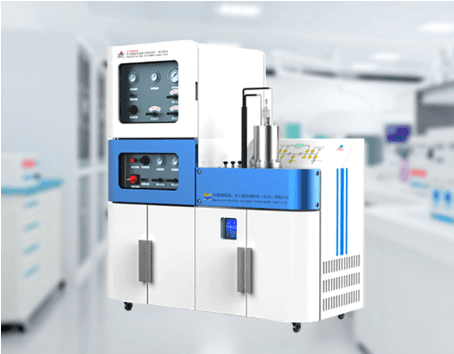
The BSD PHC High-Pressure Adsorption Analyzer is a fully automated, high-efficiency instrument designed for high pressure gas adsorption analysis. With a pressure range of 0-50/69/80 MPa and a temperature range from -196°C to 1100°C, it provides precise and versatile testing capabilities for a wide array of materials. This instrument offers seamless operation and reliable data, making it an ideal solution for advanced adsorption studies in both research and industrial applications. Based on all functions of PH / PHE / PHU, an optional module is available to apply both axial and radial stresses to intact rock cores and coal cores, simulating in-situ formation stress conditions. This enables the evaluation of CH₄ and CO₂ adsorption performance of rock and coal cores under high-stress conditions, significantly improving the accuracy of gas storage capacity assessment.

facebookLinkedintwitterskypewhatsapp
Main Function
  • High pressure adsorption & desorption isotherms upto 69 Mpa;
  • High pressure pressure composition isotherm PCT;
  • Automatic Cyclic Test;
Application
  • An optional module is available to apply both axial and radial stresses to intact rock cores and coal cores, simulating in-situ formation stress conditions. This enables the evaluation of CH₄ and CO₂ adsorption performance of rock and coal cores under high-stress conditions, significantly improving the accuracy of gas storage capacity assessment.
  • High-pressure adsorption research of shale gas, coalbed methane, and hydrogen storage.
  • Hydrogen storage PCT, hydrogen adsorption and desorption test;
  • Study on the adsorption performance of porous materials;
  • High pressure carbon storage;
img
File not exist! Data Sheet

Feature Icon

Pressure

0-50/69/80 MPa

Feature Icon

Temperature

-196℃ to 1100℃

Feature Icon

Main Function

High pressure Isotherm, PCT, Automatic Cyclic Test

Feature Icon

Optional Function

Kinetics, TPD, TPA, PCT with larger sample volume (100g level)

Feature Icon

Full Automation

Automatically switches from pre-treatment to testing

Feature Icon

Thermostatic design

The analyzer pipeline temperature is 40.0℃ ±0.1℃.

Feature Icon

Sample cell options

Stainless steel sample cell :2ml/ 5ml/25ml; Core sample cell:Φ25.4×50mm/Φ50×110mm/Φ38.1×100mm

Feature Icon

High-pressure design

All stainless steel gas circuit system, the joints are hard-connected with VCR, which improves the stability of the instrument.

Feature Icon

Transducers

High precision with 0.01%FS, long term 0.025%FS;

Specifications

SpecificationsDetails
Main FunctionHigh pressure adsorption and desorption isotherm High pressure PCT Isobaric adsorption/desorption kinetics Temperature programmed desorption (TPD) Temperature programmed adsorption (TPA) Vacuum desorption PCT test with larger sample volume (100g level) Automatic Cyclic Test
Analysis station1/2
Degassing station1/2
Pressure0-20MPa
Temperature-196 to 1100℃
Vacuum10-2 Pa by oil pump 10-8 Pa by molecular pump
Analysis gasH2、CH4、Ar、CO2、N2、Kr、O2、C2H6、C2H4、He etc.
Repeatability±2% by standard sample
Sample cellStainless steel sample cell :2ml/ 5ml/25ml; Core sample cell:Φ25.4×50mm/Φ50×110mm/Φ38.1×100mm Self-sealing sample tube
AutomationAutomatically switches from pre-treatment to testing after setup
Instrument thermostatic temperatureThe inside of the instrument is in the same air bath environment, the thermostatic temperature is 40.0℃, and the temperature control accuracy is ±0.1℃.
High-pressure gas pipelineAll stainless steel gas circuit system, the joints are hard-connected with VCR, which improves the stability of the instrument.
Filling rod with filterStandard sample tube filling rod with filtering function can effectively reduce the free space volume of the sample tube and prevent the sample from flying and contaminating the instrument pipelines.
img

High-Pressure Gas Adsorption 0-50/69/80Mpa

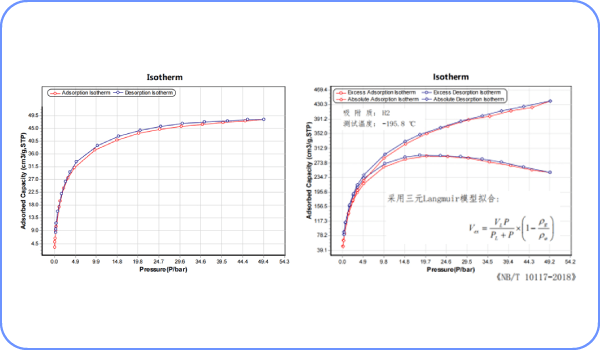
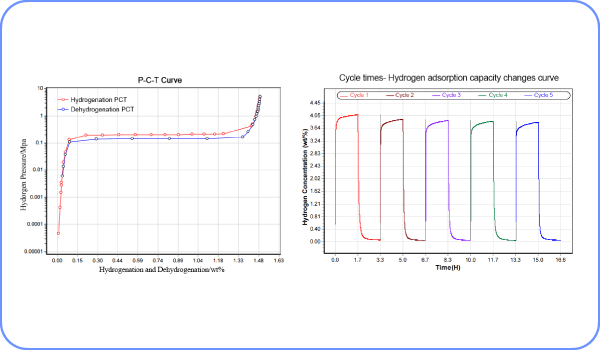
It can automatically conduct high-temperature and high-pressure gas adsorption and desorption isotherm tests, hydrogen storage PCT, hydrogen absorption and desorption, cyclic tests, etc. Designed to withstand pressures up to 69 MPa, the analyzer's robust pipeline and components are specifically engineered for demanding applications such as hydrogen storage, unconventional oil and gas recovery, and other high-pressure gas studies. This ensures reliable, precise results in a wide range of industrial and research settings.

img
img

Full Automation

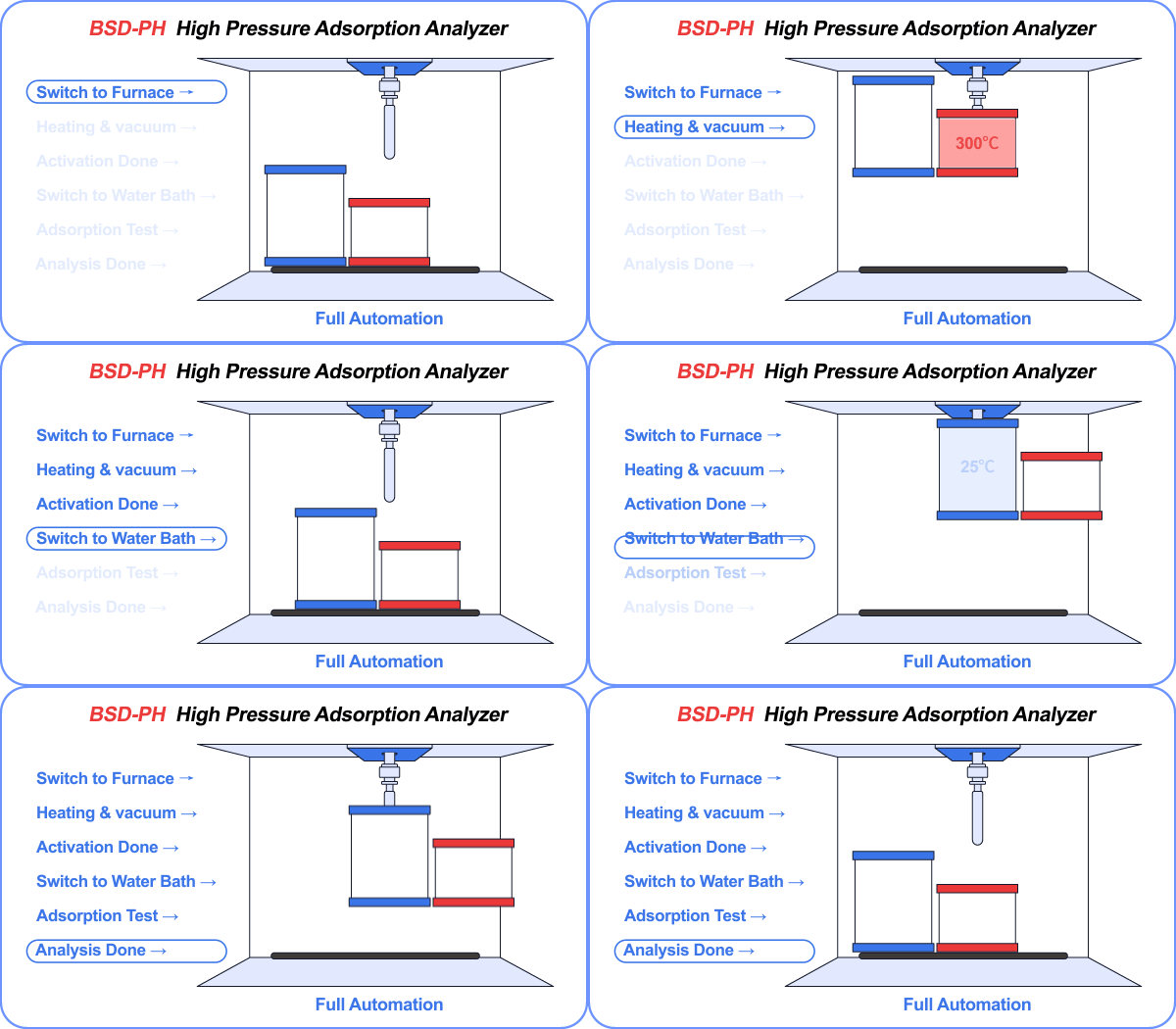
The analyzer offers complete automation from sample pre-treatment to adsorption testing, utilizing an in-situ degassing system and a reliable platform switching mechanism. This streamlined design eliminates the need for manual intervention during lengthy activation and testing processes, allowing testers to focus on analysis rather than operation. The system also supports cyclic adsorption and desorption tests, enabling the evaluation of material durability while significantly reducing repetitive tasks and saving valuable time for users.

img
img

Ultra High Pressure Storage and Release Analysis

The Ultra High Pressure Gas Sorption Analyzer offers configurable pressure ranges of 0-50 MPa or 0-69 MPa, with options for 1 or 2 analysis positions. It is ideal for high-pressure adsorption studies of shale gas, coalbed methane, and high-pressure hydrogen storage. As the highest-pressure fully automated gas adsorption instrument available globally, it is designed to meet the demanding requirements of advanced gas sorption research.

img

Other Feature

The analyzer is equipped with dual flammable gas detection alarms—one inside and one outside the system—for enhanced safety and real-time hazard monitoring. Additionally, the analysis position features a protective cover to shield operators from high temperatures, ensuring full protection during testing.

The instrument incorporates a patented BEST manifold design, providing exceptional integrity and minimizing dead volume to improve measurement accuracy. The all-stainless-steel gas pipeline system utilizes VCR metal hard connectors for superior sealing, and leak detection is conducted with an Inficon helium mass spectrometer, ensuring a high level of system airtightness and reliability.

Equipped with an imported high-precision pressure sensor, the system offers an impressive accuracy of 0.01% FS and long-term stability of 0.025% FS, ensuring precise pressure measurements over extended periods of use.

A non-barrier pollution prevention device, combined with an anti-pumping software program, eliminates the risk of volatile sample boiling under high vacuum conditions. This design prevents contamination of the valve and pipeline system, preserving the integrity and airtightness of the entire system.

The standard sample tube filling rod is equipped with a filter to reduce the free space volume in the sample tube. This effectively prevents sample splashing or contamination of the instrument's internal components, safeguarding both the instrument and the integrity of the test.

Typical Cases & Paper Citation

Image
Image
A composition-based model for methane adsorption of overmature shales in Wufeng and Longmaxi Formation, Sichuan Basin Author links open overlay panel Wenbin Jiang a b, Gaohui Cao a, Chao Luo c d, Mian Lin a b, Lili Ji a b, Ji Zhou a b

The Wufeng-Longmaxi Formation shale in Sichuan Basin is the main strata of shale gas exploration and development in China. Adsorbed methane is an important part of the total shale gas content. The influence of shale composition on adsorption characteristics is complex, and it is difficult to obtain a comprehensive understanding without a sufficient amount of data. In this work, the total organic carbon (TOC), X-ray diffraction (XRD) mineral analysis, and the excess methane adsorption isotherms with pressure up to 50 MPa at 40 °C of 106 overmature shale samples with TOC of 0.8%-9.0% and clay content of 2%-58% that belong to Wufeng-Longmaxi formation from 10 shale gas wells in Sichuan Basin, China are experimentally investigated and analyzed. New correlations found between compositions and methane adsorption characteristic parameters guide the establishment of a composition-based methane adsorption model that the excess adsorption isotherm of shale is the content-weighted sum of equivalent unit-content excess isotherms for organic matter and clay. With this model, the differences of excess isotherms of these two compositions and the differences of clay-contribution to methane adsorption for different sublayers are disclosed. It is beneficial to improve the accuracy of shale reservoir evaluation of studied blocks under the condition of limited coring and deepening the understanding of the underlying mechanism of methane adsorption characteristics.