Home / Product / BSD...

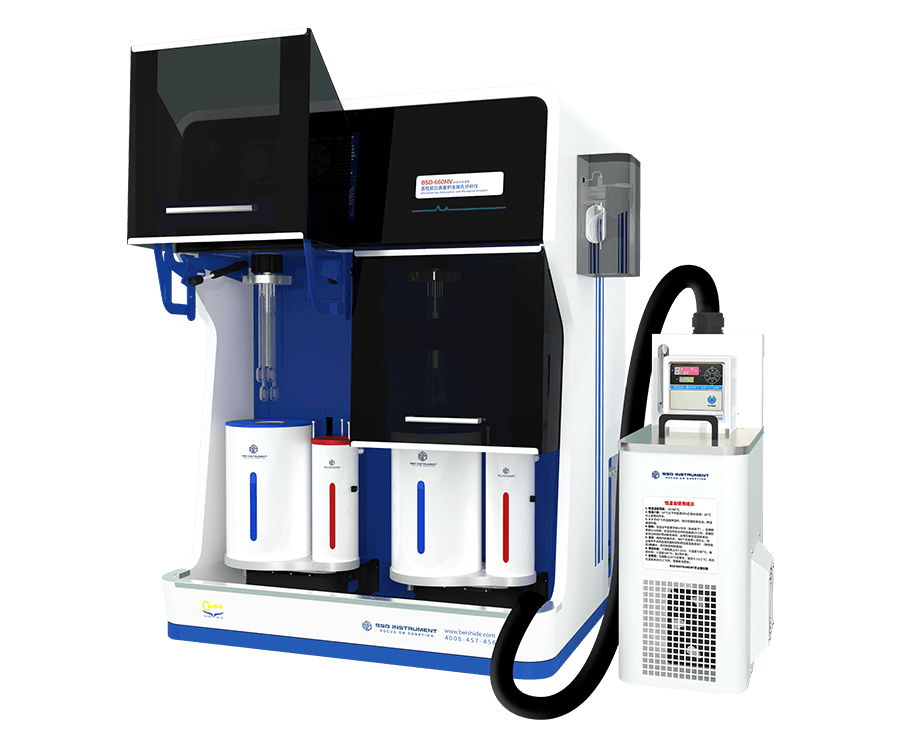
BSD-660MV AUTOMATIC VAPOR/GAS ADSROPTION ANALYZER

The versatile, high-performance instrument is designed for comprehensive gas adsorption testing. It supports the adsorption isotherm testing of vapors like H2O and Organic vapor, as well as conventional and flammable gases such as N2, O2, CO, CO2, H2, CH4, and C2H6. The analyzer provides full functionality for analyzing specific surface area, mesopores, micropores, and ultra-micropores. With high throughput capabilities, it offers 3, 6, 9, or 12 analysis positions and features fully automated operation, including degassing and testing cycles. The analyzer automatically cycles through material adsorption performance evaluations, providing reliable, repeatable results.

facebookLinkedintwitterskypewhatsapp
Main Function
  • Isotherm;
  • BET surface area;
  • Pore volume and pore size analysis;
  • N2/ Ar/ Kr adsorption analysis;
  • Regular gas adsorption analysis (E.g. N2, O₂, Ar, CO, CO₂)
  • Combustible gas adsorption analysis (E.g. H₂, CH₄, C2H6)
  • Vapor adsorption analysis (E.g. H2O, Organic vapor)
Technical Parameter
  • 3/6/9/12 analysis ports;
  • Pore size 0.35nm-500nm;
  • Full automatic In-situ activation& analysis;
  • Vaccum System: 10^-2 Pa with mechanical pump, 10^-8 Pa with molecular pump.
img
File not exist! Data Sheet

Key Feature

Feature Icon

Full Automation

In-situ degassing and testing without manual handlement

Feature Icon

High-Throughput

Up to 12 samples analyzed in one time

Feature Icon

≥ 0.01m2 /g

Surface Area

Feature Icon

0.35nm- 500nm

Pore Size

Feature Icon

High Precision

RSD< 0.5% (Reference materials )

Feature Icon

Pressure Control Heating

PCH protect pore structure and prevent material being blown away

Feature Icon

Zero Helium Contamination

No removal of samples cell; heating degassing by molecular pump

Feature Icon

Multiple Gas Inlets

Multi-inlet for adsorbate gas analysis

Feature Icon

Self-diagnose

Intelligent equilibrium judgement and Test Monitoring

Specifications

SpecificationsDetails
Analysis Ports3/6/9/12
Analysis Range1.0x 10¯⁸ to 1.0 P/P0
Vacuum Pump1* Oil+ 1* Molecular pump
Independent P0 tube1
Surface Area0.01 m²/g and above
Pore Size0.35nm-500nm
Pore Volume0.0001cc/g and above
Test Gas
Gas Inlets5 standard, 10 optional
Adsorbate gasN2, Ar, Kr, CO2, and Vapor
Vapor Sorption OptionYes
Corrosive gas OptionOptional 660-MC
Degas
In Situ3/6/9/12 In Situ ports
HeatingAmbient to 400C
Pumping1.0x 10¯⁸ to 1.0 P/P0
None In Situ12 available with AD12
Test Temperature
Cryogen DewarVolume 3L, Test Hours> 90hrs
Free Space ControlServo motor control temperature zone with evaporation rate calculation
Water bathThermostatic water bath -10°C to 80°C
img

Full Automation

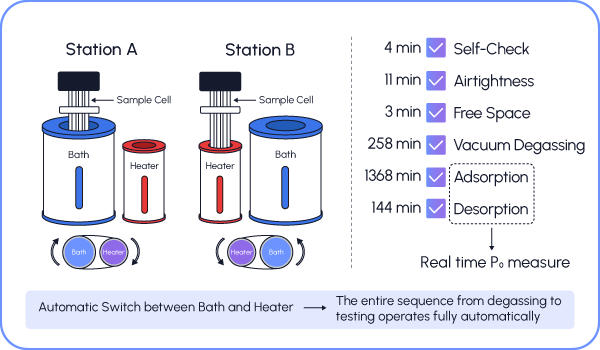
The BSD-660 series offers complete automation throughout the entire testing process, including self-checks, free zone measurements, material activation, and in situ adsorption testing. It eliminates the need for manual handling of sample cells, heating furnaces, or Dewar cups, allowing researchers to focus on higher-level analysis rather than repetitive tasks. Once material activation is complete, the system automatically manages the entire workflow—performing in situ degassing, adjusting the heating furnace, and switching between Dewar cups with LN2 or a water bath as required. With its high-throughput capabilities and fully automated operation, the BSD-660 enhances lab efficiency, precision, and functionality, delivering a seamless, hands-free testing experience.

img
img

High throughput of 12 in situ analysis ports

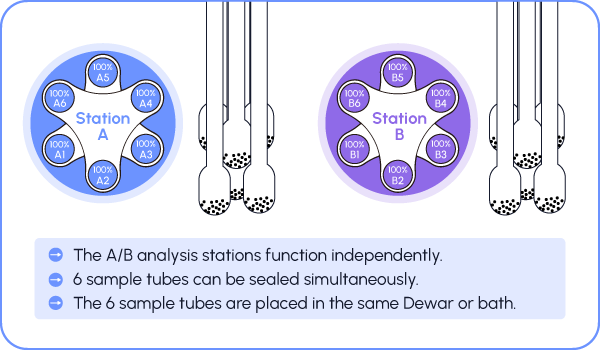
The 660 Series offers a flexible dual-station setup, with each station featuring 3 or 6 in situ analysis ports, enabling simultaneous testing with different gases and parameters. This high-throughput, fully automated system minimizes queuing times and eliminates the need for after-hours manual intervention. Its versatile configuration ensures optimal efficiency by allowing tests with varying gases and settings, streamlining workflows and enhancing overall productivity for faster, more effective testing cycles.

img
img

Pressure Control Heating

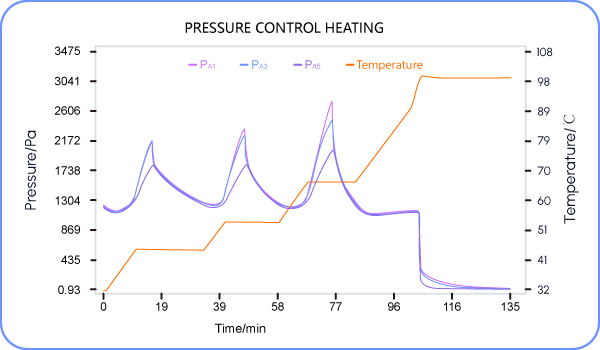
The Pressure-Controlled Heating (PCH) function intelligently adjusts the heating rate based on real-time pressure signals, ensuring a stable and controlled outgassing process. This precision control protects the integrity of pore structures, preventing damage during testing. Additionally, the PCH function minimizes the risk of material powders being displaced and carried into the pipeline or manifold, preserving both the sample and the system's functionality. This feature ensures optimal performance and reliability throughout the testing process.

img

Other Feature

Servo-driven control system maintains constant free space based on nitrogen evaporation calculations, ensuring accurate measurements.

Automatically verifies degassing completeness by monitoring pressure changes, ensuring reliable results.

Facilitates automatic testing with multiple settings on the same sample, streamlining repeated analysis.

Conducts comprehensive self-checks on key parameters, including Sbet accuracy, mass accuracy, mass loss, leakage, temperature zone precision, adsorption rates, and equilibrium analysis at various pressure levels.

Internal gas system maintains a stable temperature of 40°C with an accuracy of less than 0.1°C, ensuring consistent test conditions.

A single seal for six sample tubes in one analysis station eliminates the need for individual tube sealing, significantly enhancing testing efficiency.

Offers up to 8 independent gas inlets, accommodating a variety of gases such as CO2, O2, Ar, CO, H2, CH4, C2H6, and alkynes for versatile testing.

The space-saving, user-friendly design allows for easy access with an upward-opening screen.

Automatically inputs mass data, reducing manual entry errors and improving workflow efficiency.

Typical Cases & Paper Citation

Image
Image
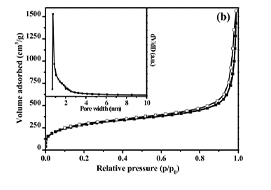
Synthesis of Defect-Rich Titanium Terephthalate with the Assistance of Acetic Acid for Room-Temperature Oxidative Desulfurization of Fuel Oil Gan Ye, Yulong Gu, Wei Zhou, Wei Xu, Yinyong Sun

The development of highly active oxidative desulfurization (ODS) catalysts is of practical importance for producing clean fuel oil. Recently, metal–organic frameworks (MOFs) have been attempted as ODS catalysts. However, the studies found that most of the MOFs were less active in ODS reactions mainly due to the lack of defect sites in the structure. Therefore, the synthesis of MOFs with defect sites has been pursued. Herein, porous titanium terephthalate with rich defect sites can be prepared with the assistance of acetic acid by the solvothermal method. The obtained material exhibited not only extraordinary ODS activity for the removal of DBT (87.1 mmol h–1 g–1) in model oil at room temperature but also simultaneously the strong ability of separating the sulfone product from the oil phase with a total sulfur removal content of 117 mg S/g catalyst when the concentration of 500 ppmw S in model oil was used. Such good catalytic performance could be mainly attributed to the creation of rich defect sites, high surface area, and the exposure of abundant active sites in the structure of the porous titanium terephthalate.